← Home · In-Situ Testing

Field Permeability Testing (Lefranc & Lugeon) in Long Beach

Together, we solve the challenges of tomorrow.

LEARN MORE →

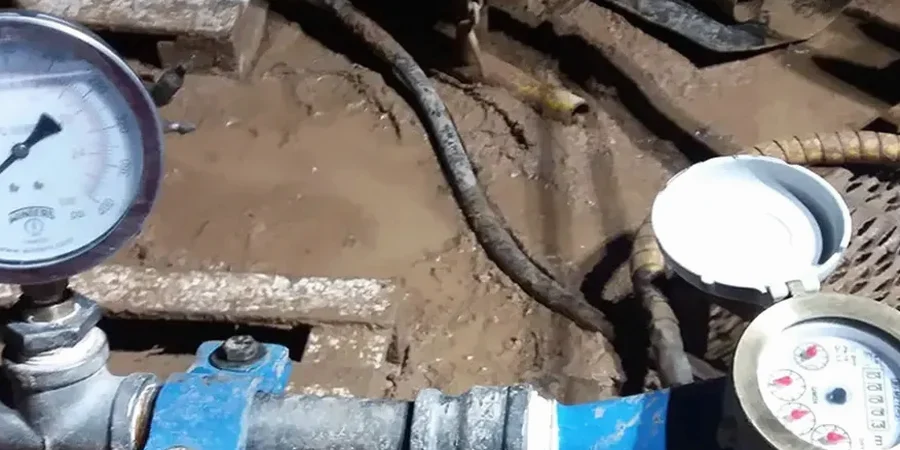
A steel packer assembly, a calibrated water tank, and a digital pressure transducer rigged up at the collar—that's the typical setup when our crew arrives for a borehole permeability test in Long Beach. The Lefranc method uses a simple falling or constant head approach within the casing to measure hydraulic conductivity in soil, while the Lugeon test isolates a rock interval with inflatable packers and applies staged pressure. Both procedures require patience and precision, especially when dealing with the interbedded sands and silts that dominate the subsurface around the Los Cerritos Channel. What we're really after is a reliable coefficient of permeability (k in cm/s) that the design team can plug directly into a dewatering model or a cutoff wall specification. Without that number, you're just guessing how fast water moves through the formation.

In coastal Long Beach, a Lugeon value above 5 Lu in fractured siltstone can mean the difference between a conventional sump pump and a full wellpoint dewatering system.

How we work

The shallow geology beneath Long Beach is largely shaped by the Los Angeles Basin’s Quaternary alluvium—interlayered sands, silts, and occasional gravel lenses deposited by the ancestral Los Angeles and San Gabriel rivers. We routinely encounter groundwater at depths between 8 and 15 feet across much of the coastal plain, which makes permeability profiling essential before any excavation deeper than a single basement level. During a Lefranc test in granular material, we measure the rate of water level recovery after lowering the column; in a Lugeon test within the underlying Pico or Fernando formations, we apply up to 150 psi in five pressure stages and record the water take in Lugeon units (1 Lu ≈ 1.3×10⁻⁵ cm/s). This data feeds directly into the shoring design, often alongside a CPT test to correlate continuous soil behavior with discrete permeability intervals, and sometimes paired with a liquefaction assessment given the site class D and E profiles common near the harbor.
Field Permeability Testing (Lefranc & Lugeon) in Long Beach
Technical reference image — Long Beach

Local geotechnical context

Long Beach’s transformation from a 19th-century seaside resort into one of the busiest port complexes on the West Coast came with an aggressive expansion of filled tidelands and engineered waterfront. Much of the downtown and port area sits on hydraulic fill and young alluvium that wasn’t meant to support the kind of deep excavations we see today. When a contractor skips the field permeability test and relies solely on grain-size correlations, the dewatering estimate can miss by a factor of three or more. We’ve seen sump pumps overwhelmed within hours of cutting into a permeable sand lens that didn’t show up on the boring logs. The real cost isn’t the testing—it’s the delay and re-engineering when groundwater inflows surprise everyone. For any project within a mile of the coastline, where tidal fluctuations add another variable, a direct measurement of hydraulic conductivity with the Lefranc or Lugeon method is simply non-negotiable engineering practice.

Need a geotechnical assessment?

Reply within 24h.

Email: info@geotechnicalengineering1.com

Technical data

ParameterTypical value
Test standard (soil)ASTM D6391-11 (Lefranc method)
Test standard (rock)ASTM D4630-19 (Lugeon method)
Packer typeSingle or double pneumatic packer
Measurement range1×10⁻⁷ to 1×10⁻¹ cm/s
Pressure stages (Lugeon)5 stages, typically 25-150 psi
Borehole diameterNX to 6-inch rotary wash
Reporting unitscm/s and Lugeon units (Lu)

Related services

01

Borehole Permeability Testing

We perform both falling-head Lefranc tests in soil and multi-stage Lugeon tests in weak rock using pneumatic packers and digital data acquisition. Each test interval is selected based on the boring log and project-specific dewatering requirements.

02

Dewatering Feasibility Studies

Using the permeability values measured in the field, we calculate expected inflow rates and recommend dewatering system types—from deep wells to vacuum-assisted wellpoints—for excavations in Long Beach’s high-water-table zones.

03

Groundwater Control Design Input

We deliver the hydraulic conductivity parameters needed for numerical modeling (MODFLOW, SEEP/W) and cutoff wall design, ensuring the contractor has defensible numbers before the first shoring soldier beam goes in.

Relevant standards

ASTM D6391-11: Standard Test Method for Field Measurement of Hydraulic Conductivity Using Borehole Infiltration (Lefranc), ASTM D4630-19: Standard Test Method for Determining Transmissivity and Storage Coefficient of Low-Permeability Rocks by In Situ Measurements Using the Constant Head Injection Test (Lugeon), IBC 2021 Section 1803: Geotechnical Investigations, ASCE 7-22 Chapter 20: Site Classification Procedure for Seismic Design

Common questions

What’s the difference between a Lefranc test and a Lugeon test?

The Lefranc test measures hydraulic conductivity in soil by filling the borehole casing with water and observing the rate of fall or maintaining a constant head. It’s run in unconsolidated materials like sands and silts. The Lugeon test is designed for rock; it uses an inflatable packer to isolate a specific interval and pumps water in at five stepped pressure stages to assess fracture flow. In Long Beach, we often run both on the same boring—Lefranc in the alluvium and Lugeon once we hit the Pico Formation siltstone.

How much does a field permeability test cost in Long Beach?

For a single borehole with one Lefranc test interval and one Lugeon test, the cost typically ranges from US$680 to US$1,030, depending on the depth and the number of pressure stages required. Mobilization, drilling, and reporting are usually priced separately, and we provide a fixed-fee proposal after reviewing the geotechnical scope.

How long does the test take on site?

A single Lefranc falling-head test on a shallow interval can be completed in 30 to 60 minutes once the borehole is prepped. A full five-stage Lugeon test in rock typically requires 60 to 90 minutes per interval, not counting packer inflation and stabilization time. Most of the schedule is actually controlled by the drilling crew and how fast they advance the hole.

Can I use grain-size correlations instead of a field test?

Hazen’s formula and similar correlations can give you a rough estimate for clean, uniform sands, but they don’t account for fine content, layering, or fissures. In the interbedded alluvium around Long Beach, we’ve seen lab-derived permeability values overestimate field conductivity by an order of magnitude. A direct Lefranc or Lugeon measurement eliminates that uncertainty, which matters a lot when you’re sizing dewatering pumps.
Location and service area

We serve projects in Long Beach and surrounding areas. More info.

View larger map