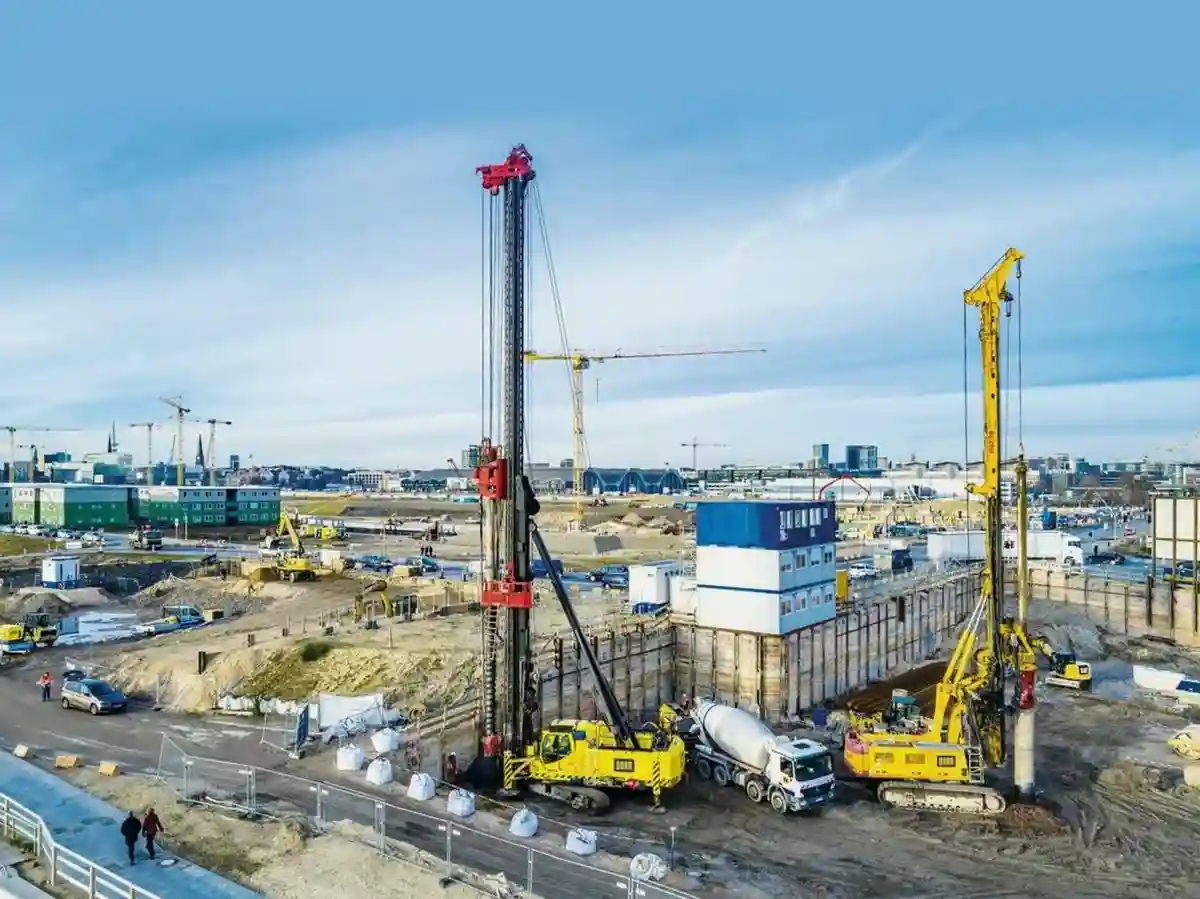
Long Beach sits at just 52 feet above sea level, with much of its footprint built on the floodplains of the Los Angeles and San Gabriel Rivers. The 1933 Long Beach earthquake—a magnitude 6.4 event centered right beneath the city—rewrote California building codes and exposed the vulnerability of shallow foundations in the area. Today, pile foundation design must account for alluvial deposits, potentially liquefiable sands, and the high water table that sits only 5 to 10 feet below the surface across much of the coastal plain. The loading conditions here are not generic: lateral spreading near the Los Cerritos Channel and the port waterfront demands a site-specific approach. We provide that—combining subsurface data with structural load paths to produce pile designs that hold when the ground moves. Unlike a standard drilled shaft, our pile solutions are tailored to the stratigraphy encountered at each block and lot. For sites near the San Gabriel River, where gravel lenses can deflect driven piles, we often pair the design phase with a CPT test to map refusal layers in real time. This avoids costly field adjustments and ensures the pile tip reaches competent bearing stratum without overruns.
In Long Beach, the pile tip often needs to reach 65 to 80 feet to bypass the liquefiable Holocene sands and bear on the Pleistocene alluvium—depth matters.
How we work
The harbor expansion of the 1920s and the oil boom that dotted Signal Hill with derricks left Long Beach with a layered subsurface: undocumented fill over marine sediments over Pleistocene alluvium. That history matters when designing deep foundations. A pile driven through 12 feet of hydraulic fill hits different resistance than one socketed into the Lakewood Formation. Our design methodology begins with stratigraphic interpretation: we correlate boring logs, CPT soundings, and lab index tests to define the engineering units, then select pile type—driven H-pile, precast concrete, or cast-in-drilled-hole—based on capacity, corrosion potential, and constructability. Skin friction in the soft clays of the Wilmington complex is low; end bearing in the dense sands below 60 feet becomes the primary load transfer mechanism. We specify pile lengths, diameters, and reinforcement using axial load calculations verified against static analysis and, where the budget allows, dynamic testing. When lateral loads govern—common in the port districts with crane rails and container stacks—we integrate the foundation design with a
liquefaction assessment to quantify loss of lateral support during a design-level seismic event. Corrosion protection for steel piles in the brackish groundwater of the Dominguez Gap area is addressed through sacrificial thickness or epoxy coating, depending on the exposure class.
Local geotechnical context
The Long Beach oil field—one of the most productive in the Los Angeles Basin—has left a legacy of abandoned wells, sump holes, and undocumented fill that create point hazards for pile installation. A well casing encountered during driving can deflect the pile, damage the hammer, or worse, create a conduit for gas migration. Pre-construction research through DOGGR records and geophysical scanning is not optional; it is a prerequisite. Beyond man-made obstructions, the city’s Site Class D and E soils amplify ground motion. Liquefaction-induced settlement can strip skin friction from the upper 30 to 40 feet of a pile, transferring all load to the tip. If the bearing layer is not thick enough or contains interbedded silt seams, punching failure becomes a real risk. The Newport-Inglewood fault runs directly through the city, and the design must account for near-source effects: vertical acceleration, pulse-like ground motion, and the possibility of permanent ground displacement. Our pile designs incorporate redundancy—extra embedment, larger tip area, and steel reinforcement ductility—to survive these combined demands without brittle failure.
Relevant standards
ASCE 7-22: Minimum Design Loads and Associated Criteria for Buildings and Other Structures, IBC 2021 (California Building Code Chapter 18): Soils and Foundations, ASTM D1586: Standard Test Method for Standard Penetration Test (SPT) and Split-Barrel Sampling of Soils, AASHTO LRFD Bridge Design Specifications, 9th Ed: Deep Foundations, API RP 2GEO: Geotechnical and Foundation Design Considerations (for port-related piles)
Common questions
What pile type is most suitable for Long Beach waterfront sites?
For the port and marina areas, driven steel H-piles or precast prestressed concrete piles are common. Steel H-piles penetrate dense sands efficiently and can be spliced for long lengths. Concrete piles offer inherent corrosion resistance in the brackish groundwater environment. The choice depends on the axial load magnitude, lateral demands from berthing forces, and the depth to competent bearing stratum—typically the Pleistocene alluvium at 65 to 80 feet.
How much does a pile foundation design cost for a Long Beach project?
Professional fees for a pile foundation design package, including load calculations, pile specifications, and a stamped design report, typically range from US$1,740 to US$6,830 depending on the number of piles, the complexity of the subsurface conditions, and whether dynamic testing oversight is included. A simple residential addition with four piles is at the lower end; a multi-story commercial building with lateral load demands is at the higher end.
How is liquefaction addressed in the pile design?
We evaluate the liquefaction susceptibility of each granular layer using SPT blow counts or CPT tip resistance, applying the Boulanger & Idriss (2014) triggering procedure. For layers that liquefy at the design earthquake, we calculate the post-liquefaction settlement and apply it as down-drag (negative skin friction) on the pile. The pile tip is embedded into a non-liquefiable bearing layer deep enough to resist the combined dead load plus down-drag without exceeding the allowable settlement.
What is the typical timeline for a pile design submittal?
Once the geotechnical investigation is complete and the structural loads are provided, a pile foundation design package can be delivered in 10 to 15 business days. This includes the axial and lateral capacity calculations, the pile schedule with tip elevations and reinforcement details, and the stamped design report. If dynamic testing coordination is required, an additional week is needed to review the PDA data and issue the final as-built confirmation.