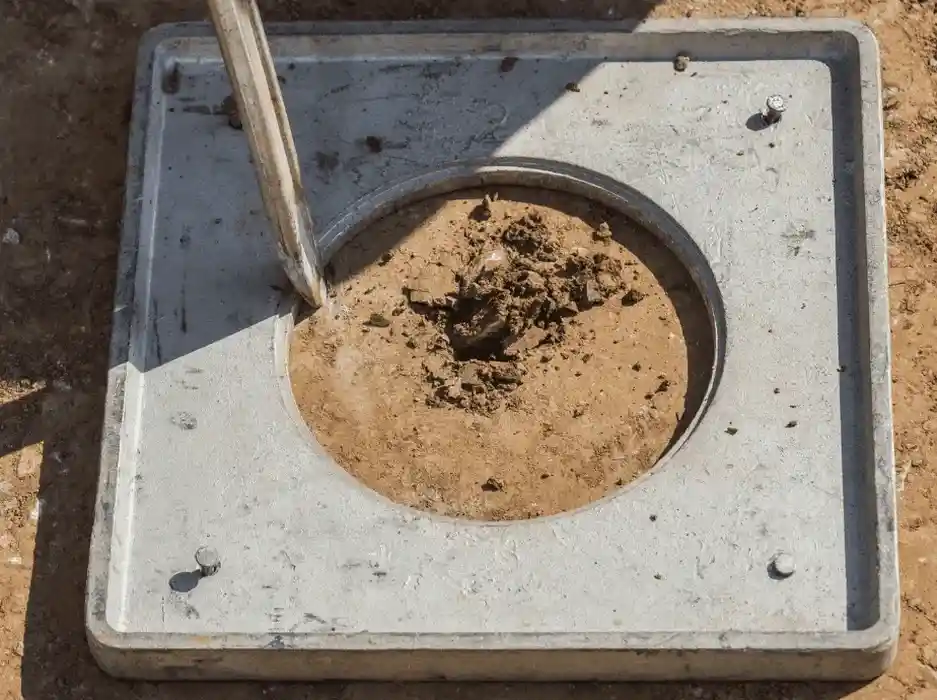
The seismic response of land near the Port of Long Beach differs dramatically from what you would find a few miles inland near Signal Hill. Where the coastal plain sits on Holocene alluvium and artificially placed fill, groundwater often sits within six to ten feet of the surface. That combination of loose saturated sand, shallow water, and proximity to the Newport-Inglewood Fault makes Long Beach one of the most liquefaction-prone urban zones in Southern California. A standard soil report without a site-specific liquefaction analysis simply does not capture this risk. Our team runs the necessary in-situ permeability tests to establish drainage potential, then models pore pressure buildup under the design earthquake so the structural engineer has a clear picture of what the ground will actually do during a major event.
In Long Beach, a factor of safety below 1.2 at any single sublayer triggers mandatory mitigation per the current California Building Code.
Relevant standards
ASCE 7-22 — Minimum Design Loads and Associated Criteria for Buildings and Other Structures, 2022 California Building Code (CBC), Title 24, Part 2 — Chapter 16 and Chapter 18, ASTM D1586/D1586M-18 — Standard Test Method for Standard Penetration Test (SPT) and Split-Barrel Sampling of Soils, ASTM D5778-20 — Standard Test Method for Electronic Friction Cone and Piezocone Penetration Testing of Soils, ASTM D2487-17e1 — Standard Practice for Classification of Soils for Engineering Purposes (Unified Soil Classification System)
Common questions
How much does a soil liquefaction analysis cost for a typical Long Beach commercial lot?
For a standard commercial parcel in Long Beach, a complete liquefaction study — including two borings to 50 feet, SPT sampling, laboratory classification, and the engineering report with triggering, settlement, and lateral spreading evaluation — runs between US$2,820 and US$3,920. The final figure depends on access constraints, groundwater depth, and whether CPT soundings are added to supplement the SPT data.
Does every project in Long Beach require a liquefaction analysis?
The City of Long Beach Building Department enforces CBC Chapter 18, which requires a site-specific liquefaction assessment when the mapped hazard is moderate to high and the structure falls under Risk Category II or higher. Most of the city south of the 405 falls into that zone, so the analysis is mandatory for nearly all commercial, multifamily, and essential-facility projects.
What is the difference between SPT-based and CPT-based liquefaction analysis?
SPT-based analysis uses blow counts from a split-spoon sampler and provides a soil sample for visual classification; its main advantage is direct correlation to decades of empirical case-history data. CPT-based analysis uses a continuous electronic cone that gives a nearly uninterrupted profile of tip resistance and pore pressure — ideal for detecting thin liquefiable seams that a standard six-inch SPT interval can miss. We often combine both methods on Long Beach sites with complex stratigraphy.
How long does the analysis take from field work to final report?
After the drilling or CPT truck leaves the site, laboratory index tests take roughly seven to ten business days. The engineering analysis — including cyclic stress ratio calculation, factor-of-safety profiling, and settlement estimation — typically adds another week. For a standard two-boring program in Long Beach, the complete report is delivered within three to four weeks from the field date.